
Knox County Arrest Records and Court Charges
Arrest records begin on the law-enforcement and jail side. In Knox County, the booking record may identify the person booked, arresting agency, booking date, booking number or jail identifier, public charge description, bond information, hold information, and court date if those fields are populated in the detention system. The Knox County Sheriff's Office and Knox County Detention Center are the practical sources for custody questions, booking status, and jail records that are not shown online.
Court charge records begin when a criminal accusation is filed in the Kentucky court system. Misdemeanors, traffic offenses, preliminary felony matters, and many first appearances are handled in District Court. Felony prosecutions move into Circuit Court once indicted. The Knox County Circuit Court Clerk at 401 Court Square, Barbourville, KY 40906, phone 606-546-3075, is the local court-record contact for case-linked charges, dockets, certified copies, and older files. For the booking side, use inmate records; for plea, disposition, sentence, and the complete criminal file, use criminal court records.
How to Find Knox County Arrest Records and Charges
Start with the source that matches the question. If the question is whether someone is currently in custody, use the Knox County Detention Center roster path at Knox_inmate_list.html. If the question is what court charges after arrest are pending or disposed, use Kentucky Court of Justice channels: the court-date search, KYeCourts/CourtNet, and the Circuit Court Clerk. If the case is not online, the clerk's office remains the local verification point for case number, division, charge list, and certified copies.
- Check current custody through the Knox County Detention Center roster when the arrest is recent or the person may still be jailed.
- Use the KCOJ docket search to look for a hearing date by Knox County, court division, date, party name, or case number where the interface allows it.
- Use CourtNet or KYeCourts for case-search access when available by role, registration, or subscription.
- Call the Knox County Circuit Court Clerk at 606-546-3075 for certified copies, sealed-file questions, older files, and case-linked charge confirmation.
Do not treat a booking entry as the final court outcome. A jail charge can lag behind the court docket, and a court docket may show amended counts, dismissed counts, bond changes, arraignment entries, or later disposition that the jail roster does not fully explain. For state-level criminal-history questions, Kentucky State Police background-check channels are separate from a casual court lookup, and expungement status must be verified through the court that handled the case.
The U.S. District Court for the Eastern District of Kentucky is a separate federal court system, not a Knox County Circuit or District Court database.
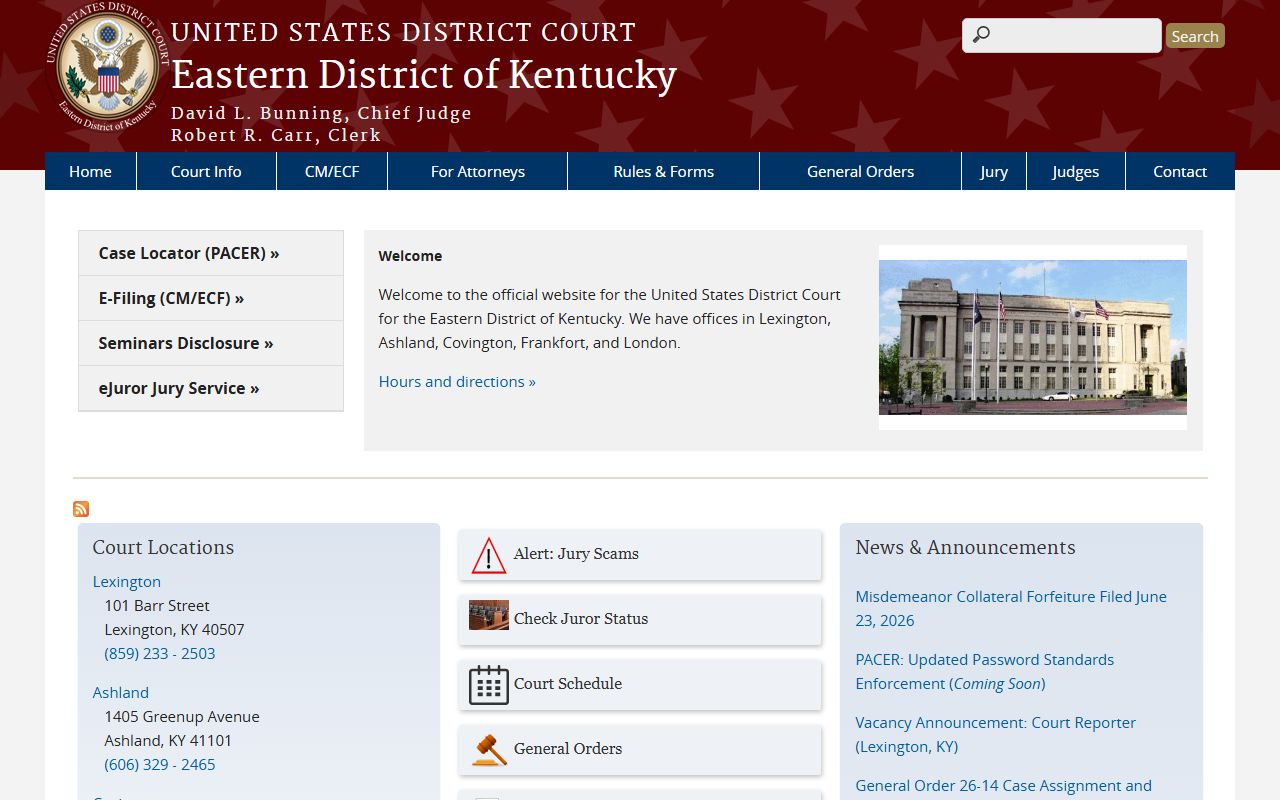
Use federal court resources only when the charge is federal, removed to federal court, or tied to a federal indictment rather than a Knox County state-court case.
How Charges Get Filed After an Arrest: Complaint, Information, and Indictment
After arrest and booking, the court charge record is built around a charging document. Kentucky records may reference a complaint, citation, information, indictment, warrant, or later amended charge. The document matters because it explains who initiated the accusation, what statute or offense description is alleged, and which court division handles the next step. A single arrest can produce several counts, and each count may have its own charge class, bond, plea, disposition, and sentence.
| Complaint | Information | Indictment | |
|---|---|---|---|
| Filed By | Officer, complaining witness, or prosecutor depending on the case path. | Prosecutor, commonly when allowed by criminal procedure and waiver or case posture. | Grand jury after presentation by the Commonwealth's Attorney. |
| Common For | Misdemeanors, violations, initial felony complaints, and cases starting in District Court. | Prosecutor-filed criminal charges where the procedure supports it. | Felony prosecutions that proceed in Circuit Court after indictment. |
| Record Use | Starts or supports the initial court charge and first appearance. | States the formal prosecutor-filed accusation. | Moves the felony charge into Circuit Court as a grand-jury accusation. |
Charge Status and What It Means
A Knox County criminal case can show different status words for the case as a whole and for each count. A case may be active even if one charge has been dismissed, or a charge may be reduced while another count remains pending. Read each entry by case number, offense description, statute, court division, docket date, and disposition. When a charge status is unclear, the Circuit Court Clerk is the safest source for the public court file, while the prosecutor's office controls its own internal work product and charging decisions.
| Status | What It Means |
|---|---|
| Pending | The charge has not reached final disposition. Future hearings, plea negotiations, motions, or trial settings may remain. |
| Amended / Reduced | The original count changed, often by agreement, court order, or prosecutor action. Compare the original offense with the current offense before relying on the record. |
| Dismissed | The charge was ended by the court. Check whether dismissal was with prejudice, without prejudice, or part of a plea to another count. |
| Nolle Prosequi | The prosecutor declined to proceed on that charge. Public visibility and expungement eligibility still depend on Kentucky law and the exact disposition. |
The U.S. Bankruptcy Court for the Eastern District of Kentucky appears in the manifest because some people confuse bankruptcy filings, restitution, judgments, and criminal financial obligations.
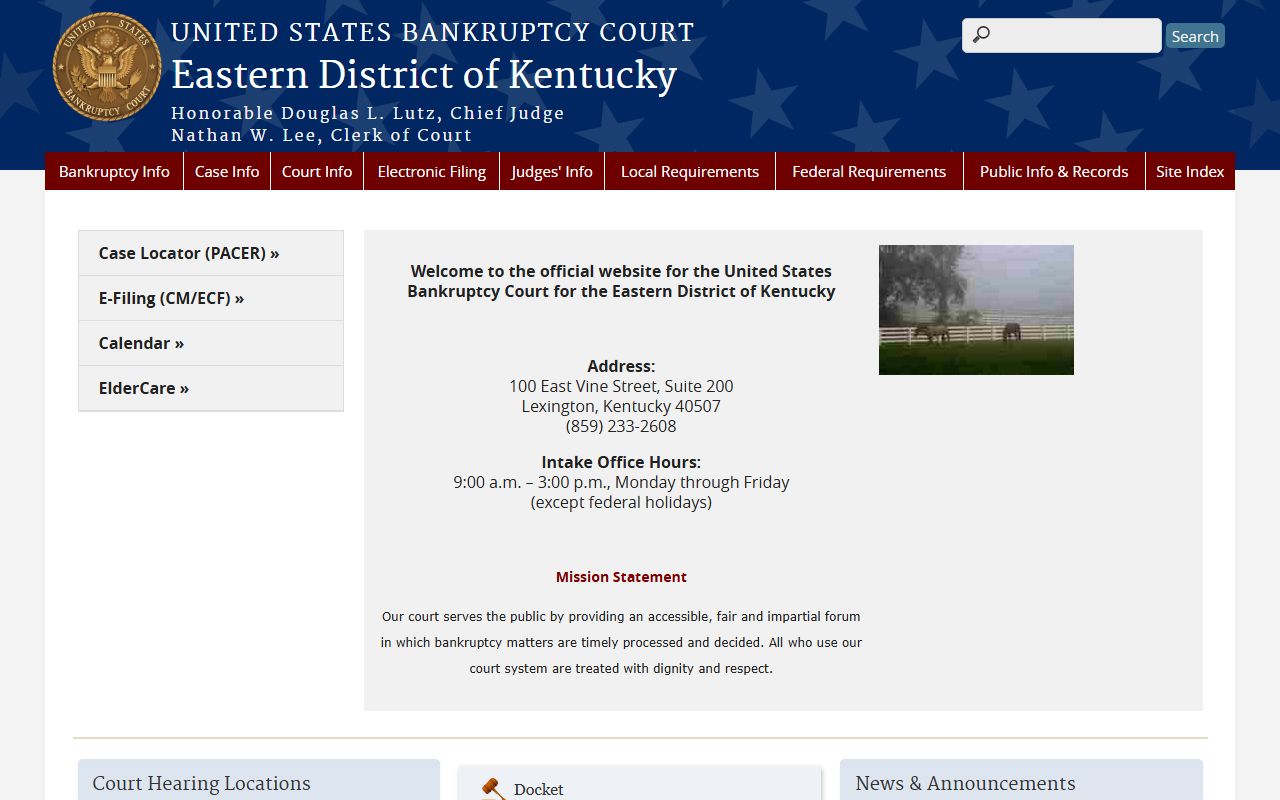
Bankruptcy records do not replace Knox County criminal charge records, but federal bankruptcy filings may matter when a user is separately reviewing debts, judgments, or restitution-related financial history.
Charges vs. Convictions
Being charged is not the same as being convicted. A charge is an accusation or count filed in court. A conviction requires a guilty plea, guilty verdict, or other qualifying final adjudication. Knox County court users should read the disposition field before treating a charge as an outcome, especially when a case contains multiple counts, amended offenses, dismissed counts, bond entries, and later expungement activity.
| Charge | Conviction | |
|---|---|---|
| Stage | Filed after arrest, citation, warrant, complaint, information, or indictment. | Entered after plea, verdict, or qualifying final court action. |
| Meaning | An allegation by the Commonwealth, officer, or charging authority. | A court-recognized finding or plea outcome on a count. |
| Record Check | Look for offense, statute, court division, bond, and current status. | Look for disposition, sentence, probation, fine, restitution, and expungement order if any. |
Charge Codes and Severity Levels
Kentucky charge records commonly identify an offense by description, statute citation, charge class, and court division. Felonies are Circuit Court matters once indicted, while misdemeanors, violations, traffic offenses, preliminary felony matters, probate, small claims, and evictions are within District Court jurisdiction under KRS 24A.110. Circuit Court jurisdiction under KRS 23A.010 explains why serious felony and higher-level civil files route through the circuit side. When a person has several charges from one arrest, each count should be read separately instead of assuming every count has the same outcome.
Statewide Charge and Criminal History Lookups
For a local court charge, CourtNet, KCOJ docket search, and the Knox County Circuit Court Clerk are the main court channels. For broader criminal-history screening, use Kentucky State Police background-check information rather than a jail roster or unofficial aggregator. For people sentenced to state custody or supervision, Kentucky Online Offender Lookup is a Department of Corrections path and does not replace the Knox County court file. For sex-offender registration, the Kentucky State Police registry is a separate public registry with its own search rules and profile fields.
The U.S. Attorney's Office for the Eastern District of Kentucky handles federal prosecutions in this region, separate from county and commonwealth prosecution paths.
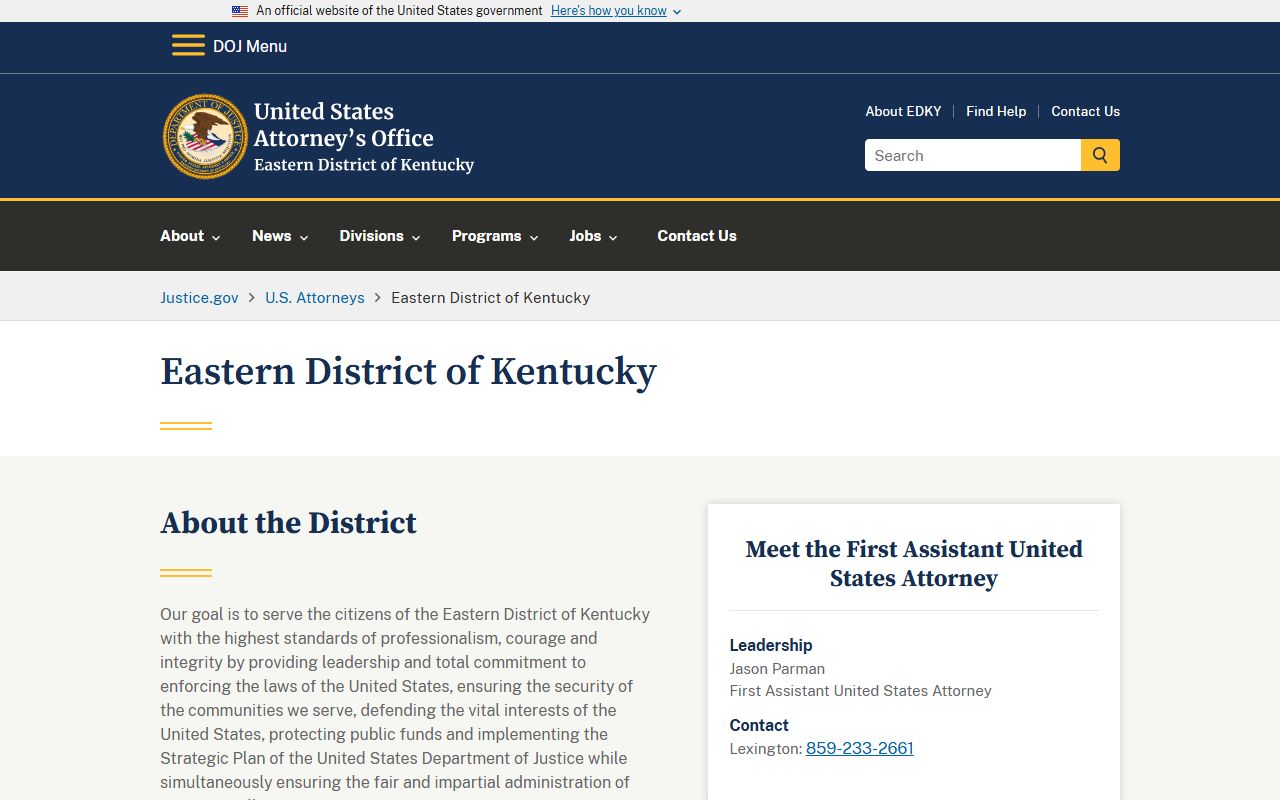
If a charge is federal, federal prosecutor and federal court records are the relevant path; if it is a Knox County state charge, use the Circuit Court Clerk, District Court, Circuit Court, and Kentucky Court of Justice systems.
Background Check Considerations
Casual court searching is not the same thing as a regulated employment, housing, credit, insurance, or licensing background check. A court docket can show a charge without showing every sealed item, nonpublic agency record, or later update in another database. Official background-check channels may require identifying information, consent, fees, or fingerprints depending on the purpose. A charge lookup should be used to locate official court and jail records, then verified with the originating court or agency before important decisions are made.
Important: This website is not a consumer reporting agency and cannot be used for FCRA-regulated screening decisions.
Restricted Charge Records in Knox County
Not every charge or arrest-related entry is public online. Juvenile court records are confidential under KRS 610.340 except as authorized by law. Sealed and expunged records should not display like ordinary public records after the proper order is entered. Adoption, mental-health, protected-address, victim-safety, minor-identifier, medical, financial-account, and active-investigation material may be redacted or withheld. Kentucky expungement requires matching the exact charge, case number, disposition, date, and court, then following the eligibility path under KRS 431.073 or KRS 431.078 where applicable. A person seeking expungement should use Kentucky Court of Justice forms and file in the court that handled the case.